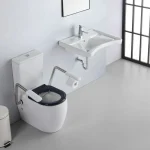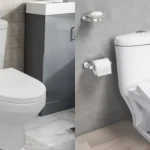
what is skirted toilet

What Is a Skirted Toilet (And Is It Worth the Money?)

If you’re planning a bathroom upgrade and you keep seeing “skirted” in product listings, you’re likely weighing two things: how much easier the toilet will be to clean, and whether the extra cost (and sometimes more finicky access during installation/service) is justified.

Ortonbaths sanitaryware is designed to be high-performance, ultra-modern, and “purpose-built” for easier cleaning and maintenance across residential and commercial washroom settings, so it makes sense that skirted designs appear frequently across their toilet lineup.

This blog explains what a skirted toilet is in practical homeowner terms, breaks down the anatomy and real-world pros/cons, and gives you a decision framework that fits the homeowners, designers, and facility buyers who want modern aesthetics, durability, and low-maintenance performance.

Definition and anatomy of a skirted toilet

A skirted toilet is a toilet whose base is smooth and continuous, with the trapway concealed behind an outer “skirt” rather than exposed as visible curves on either side. That concealed base is why skirted toilets are widely associated with faster wipe-down cleaning and a more minimalist look.

Orton Baths describes several of its one-piece models as having a “full skirt” for a sleek look that supports easier cleaning. This is the same “concealed trapway” idea, expressed in product language.

skirted toilet - ortonbaths

Skirted vs one-piece/two-piece: they’re not the same thing

A key buying insight: “skirted” describes the base/trapway visibility, not whether the toilet is one-piece or two-piece. On the Orton Baths site, you can find two-piece toilets with skirted trapways and one-piece toilets with full skirted bases, which confirms that skirted is a design attribute that can show up in multiple configurations.

Skirted toilets still use the same functional core as standard toilets, only the exterior geometry changes:

  • Pan/bowl: the porcelain body where waste is deposited.
  • Cistern/tank (or concealed carrier tank on some designs): stores flush water and contains the inlet/outlet valves and flush mechanism.
  • Trapway/trap (S-trap, P-trap, etc.): the pathway to drain waste while maintaining a water seal to block odors; skirted toilets hide the exterior curves of this trapway behind the smooth base.
  • Skirt/base shell: the smooth “apron” that covers the trapway and often obscures floor bolts from direct view (access may be via side openings or under caps, depending on design).

Benefits, drawbacks, and risks

Benefits that matter in daily use:

  • Easier cleaning and a more hygienic wipe-down are the headline benefits. With fewer curves and exposed “nooks” around the base, you typically spend less time scrubbing around bolt caps and trapway contours. This aligns closely with Ortonbaths broader promise of designs built for easy cleaning and maintenance. 
  • A cleaner, modern visual profile is the second benefit. Skirted bases hide much of the “plumbing silhouette,” which can make the bathroom feel more streamlined, especially in contemporary, hospitality, or healthcare-style spaces where visual simplicity is part of the brief.
  • Can pair well with other easy-clean features. On Orton Baths, skirted and concealed-trapway styling frequently appears alongside features like rimless bowls, quick-release seats, and concealed cistern/back-to-wall formats, each targeting the same goal: fewer grime traps and a cleaner-looking install.

Drawbacks and “real world” trade-offs

  • A higher purchase price is common. National pricing guidance comparing skirted vs non-skirted toilets often shows skirted models costing more (reflecting added design complexity and “premium styling” positioning).
  • Service access can be harder. Because skirted toilets hide the trapway and often obscure the floor bolts, installation and later servicing can require reaching through side access openings rather than working in full view, something many installers consider less convenient than a standard exposed trapway base.
  • Compatibility planning matters more in remodels. Skirted toilets aren’t inherently “hard to fit,” but your rough-in, trap type (S-trap vs P-trap), and supply location still need to match the model. Orton Baths repeatedly emphasizes checking trap type/compatibility across its educational content and product listings.

Risks you should understand (especially hidden leaks)

The biggest bathroom risk isn’t “skirted vs standard” it’s any leak at the base that goes unnoticed. InterNACHI warns that when a wax seal deteriorates or shifts, contaminated water can leak onto the floor and into hidden spaces below, where damage can accumulate out of sight.

A skirted base can be easier to wipe down, but if your toilet develops a base leak, you still need to detect and address it quickly especially because flooring/subfloor damage is where costs escalate.

Cost and value: is it worth the money?

Because you stated no specific constraint on region, the ranges below use national U.S. estimates and should be treated as planning figures, not quotes.

National cost ranges you can expect:

  • Skirted vs non-skirted purchase price (fixture only): A common national estimate puts non-skirted toilets around $100–$300 and skirted toilets around $200–$1,000 (with an average near the mid-range). 
  • Professional installation (typical toilets): Reports indicate homeowners spend an average of $374 for toilet installation, with most totals $224–$533.
  • Typical professional repair: Reports indicate an average toilet repair of $271, with many repairs costing $150–$391.

A practical takeaway: if you buy a skirted toilet for easier cleaning and design, budget for the possibility that labor may run higher in situations where access to bolts or connections is less direct. General comparisons note that non-skirted models are typically simpler to install, which can influence labor in the real world.

Efficiency payback: where “worth it” shifts in your favor

If you’re replacing an older toilet, water efficiency can change the ROI conversation substantially. The U.S. Environmental Protection Agency states that replacing old, inefficient toilets with WaterSense labeled models can reduce toilet water use by 20–60%, about 13,000 gallons per year for the average family, plus meaningful annual and lifetime bill savings.

On Ortonbaths, skirted styling appears on models marketed with water-saving and certification language (e.g., “water sense,” dual-flush, comfort height), which means you can sometimes “stack” benefits: easier cleaning + a more modern base + better efficiency.

Comparison table: skirted vs standard (non-skirted) toilets

Criteria

Skirted toilet (concealed trapway)

Standard toilet (exposed trapway)

Estimated national costs (no specific constraint)

Base design

Smooth base conceals trapway for a seamless exterior.

Trapway curves and bolt areas are visible along the sides.

Fixture-only ranges often estimated at $200–$1,000.

Cleaning effort

Faster wipe-down; fewer crevices around the base.

More detailed cleaning around curves/bolts.

Fixture-only ranges are often estimated at $100–$300.

Installation/service access

Bolts/plumbing may be less visible; access can be through side openings.

Bolts and curves are visible; generally more straightforward access.

Pro install averages $374 (typical $224–$533).

Best-fit buyers

Cleaning-focused households, modern design builds, hospitality/healthcare style applications.

Budget-focused builds, DIY-friendly servicing preference.

Repairs average $271 (typical $150–$391).

A diagnostic checklist: is it skirted right for you?

Use this checklist if you’re deciding between a skirted base and a standard exposed trapway model:

  • Cleaning reality: If you strongly value quick wipe-down cleaning around the base, skirted tends to deliver the most noticeable day-to-day benefit.
  • Aesthetics: If your bathroom design goal is minimalist or “built-in” looking, a skirted base often matches that visual direction.
  • Repairability preference: If you prioritize the simplest access for future bolt/seal work, standard bases are often considered more straightforward.
  • Space and plumbing fit: Confirm rough-in and trap type (S-trap through floor, P-trap through wall, etc.) Orton Baths highlights trap compatibility as a core selection criterion across its bathroom education content.
  • Project scope: If you’re already doing a remodel and replacing the toilet anyway, upgrading to a skirted can be easier to justify because the incremental cost is a smaller part of the total project decision.

When “repair vs replacement” matters for skirted vs standard

Most toilet problems are not porcelain failures, they’re wear components (flappers, fill valves, flush valves). The EPA emphasizes that a common toilet leak source is a worn-out flapper and recommends a simple dye/food-color test to identify leaks.

Where skirted vs standard can matter is labor and access. If you’re repeatedly servicing the base area (bolts, seal, flange access), the standard exposed base is often less fiddly; if most of your issues are internal tank components, either style can be serviced similarly because the tank internals remain accessible.

Maintenance tips and Ortonbaths solutions

Maintenance that protects your investment:

  • Run the 10-minute leak test a few times a year. The EPA recommends placing a few drops of food coloring in the tank; if color shows up in the bowl after 10 minutes, you likely have a leak (often repairable by replacing worn parts).
  • Watch for base leak warning signs. InterNACHI notes wax seal failures can leak contaminated water into hidden spaces beneath the floor, where damage can spread before you notice it so act quickly if you see moisture, staining, or persistent odor near the base.
  • Follow installation guidance and use qualified installers when appropriate. Ortonbaths installation guidance recommends observing codes and hiring a licensed professional, and also notes that two people may be recommended to handle heavier fixtures safely, advice that can be especially relevant for bulkier modern designs.

Ortonbaths skirted options that match the use-case

If you’re choosing skirted primarily for easy cleaning + a seamless modern profile, Orton Baths has multiple relevant options.

For a premium, hygiene-forward upgrade, the ORTONBATH™ Comfort Height Skirted smart One-Piece Elongated Dual-Flush Intelligent toilet, smart intelligent Toilet Bowl is positioned around a streamlined design and water-saving flushing (notably listing a 1.08-gallon flush in its product description).

If you need a more traditional configuration with certification-forward positioning, the ORTONBATH™ Siphonic S trap water sense skirted CUPC Toilets for Bathrooms Comfort Height ADA Two Piece Toilet pairs skirted styling with dual-flush and comfort-height framing.

skirted toilet

For remodels where hiding plumbing and maximizing clean lines is the whole point, the ORTONBATH™ Rimless Skirted Compact Concealed Cistern Easy Installation Floor Mount Back to Wall Toilet Pan Wall Faced Toilet with Soft Close Seat Cover is designed for a concealed carrier tank setup (sold separately) and emphasizes concealed access via the actuator plate approach.

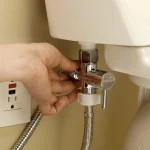
And when the problem is not the toilet body but the flushing components, the ORTONBATH™ Universal Water-Saving Toilet Repair FLUSH Kit with Dual Flush Valve, Lever Handle, White Water-Saving Dual Flush TOILET FLUSHING VALVE is explicitly marketed as a repair solution for both one-piece and two-piece toilets helpful when you want to restore performance without replacing the full fixture.

Conclusion

So, is a skirted toilet worth the money? If your household values fast cleaning, a modern seamless look, and fewer base-area crevices, skirted toilets often deliver noticeable daily-life benefits and that matches Ortonbaths broader design thesis of stylish, easy-maintenance bathroom solutions.

If you prioritize lowest upfront cost and the simplest access for future servicing, a standard exposed trapway toilet may be the better fit especially if you expect base-area work over time.

Either way, the “best value” outcome comes from:

  1. Choosing a model that matches your trap/rough-in and bathroom layout,
  2. Installing carefully (or hiring qualified help), and
  3. Maintaining proactively with simple leak tests and a quick response to any base moisture.
If you’re planning a bathroom upgrade and you keep seeing “skirted” in product listings, you’re likely weighing two things: how much easier the toilet will be to clean, and whether the extra cost (and sometimes more finicky access during installation/service) is justified.

Ortonbaths sanitaryware is designed to be high-performance, ultra-modern, and “purpose-built” for easier cleaning and maintenance across residential and commercial washroom settings, so it makes sense that skirted designs appear frequently across their toilet lineup.

This blog explains what a skirted toilet is in practical homeowner terms, breaks down the anatomy and real-world pros/cons, and gives you a decision framework that fits the homeowners, designers, and facility buyers who want modern aesthetics, durability, and low-maintenance performance.

Definition and anatomy of a skirted toilet

A skirted toilet is a toilet whose base is smooth and continuous, with the trapway concealed behind an outer “skirt” rather than exposed as visible curves on either side. That concealed base is why skirted toilets are widely associated with faster wipe-down cleaning and a more minimalist look.

Orton Baths describes several of its one-piece models as having a “full skirt” for a sleek look that supports easier cleaning. This is the same “concealed trapway” idea, expressed in product language.

skirted toilet - ortonbaths

Skirted vs one-piece/two-piece: they’re not the same thing

A key buying insight: “skirted” describes the base/trapway visibility, not whether the toilet is one-piece or two-piece. On the Orton Baths site, you can find two-piece toilets with skirted trapways and one-piece toilets with full skirted bases, which confirms that skirted is a design attribute that can show up in multiple configurations.

Skirted toilets still use the same functional core as standard toilets, only the exterior geometry changes:

  • Pan/bowl: the porcelain body where waste is deposited.
  • Cistern/tank (or concealed carrier tank on some designs): stores flush water and contains the inlet/outlet valves and flush mechanism.
  • Trapway/trap (S-trap, P-trap, etc.): the pathway to drain waste while maintaining a water seal to block odors; skirted toilets hide the exterior curves of this trapway behind the smooth base.
  • Skirt/base shell: the smooth “apron” that covers the trapway and often obscures floor bolts from direct view (access may be via side openings or under caps, depending on design).

Benefits, drawbacks, and risks

Benefits that matter in daily use:

  • Easier cleaning and a more hygienic wipe-down are the headline benefits. With fewer curves and exposed “nooks” around the base, you typically spend less time scrubbing around bolt caps and trapway contours. This aligns closely with Ortonbaths broader promise of designs built for easy cleaning and maintenance. 
  • A cleaner, modern visual profile is the second benefit. Skirted bases hide much of the “plumbing silhouette,” which can make the bathroom feel more streamlined, especially in contemporary, hospitality, or healthcare-style spaces where visual simplicity is part of the brief.
  • Can pair well with other easy-clean features. On Orton Baths, skirted and concealed-trapway styling frequently appears alongside features like rimless bowls, quick-release seats, and concealed cistern/back-to-wall formats, each targeting the same goal: fewer grime traps and a cleaner-looking install.

Drawbacks and “real world” trade-offs

  • A higher purchase price is common. National pricing guidance comparing skirted vs non-skirted toilets often shows skirted models costing more (reflecting added design complexity and “premium styling” positioning).
  • Service access can be harder. Because skirted toilets hide the trapway and often obscure the floor bolts, installation and later servicing can require reaching through side access openings rather than working in full view, something many installers consider less convenient than a standard exposed trapway base.
  • Compatibility planning matters more in remodels. Skirted toilets aren’t inherently “hard to fit,” but your rough-in, trap type (S-trap vs P-trap), and supply location still need to match the model. Orton Baths repeatedly emphasizes checking trap type/compatibility across its educational content and product listings.

Risks you should understand (especially hidden leaks)

The biggest bathroom risk isn’t “skirted vs standard” it’s any leak at the base that goes unnoticed. InterNACHI warns that when a wax seal deteriorates or shifts, contaminated water can leak onto the floor and into hidden spaces below, where damage can accumulate out of sight.

A skirted base can be easier to wipe down, but if your toilet develops a base leak, you still need to detect and address it quickly especially because flooring/subfloor damage is where costs escalate.

Cost and value: is it worth the money?

Because you stated no specific constraint on region, the ranges below use national U.S. estimates and should be treated as planning figures, not quotes.

National cost ranges you can expect:

  • Skirted vs non-skirted purchase price (fixture only): A common national estimate puts non-skirted toilets around $100–$300 and skirted toilets around $200–$1,000 (with an average near the mid-range). 
  • Professional installation (typical toilets): Reports indicate homeowners spend an average of $374 for toilet installation, with most totals $224–$533.
  • Typical professional repair: Reports indicate an average toilet repair of $271, with many repairs costing $150–$391.

A practical takeaway: if you buy a skirted toilet for easier cleaning and design, budget for the possibility that labor may run higher in situations where access to bolts or connections is less direct. General comparisons note that non-skirted models are typically simpler to install, which can influence labor in the real world.

Efficiency payback: where “worth it” shifts in your favor

If you’re replacing an older toilet, water efficiency can change the ROI conversation substantially. The U.S. Environmental Protection Agency states that replacing old, inefficient toilets with WaterSense labeled models can reduce toilet water use by 20–60%, about 13,000 gallons per year for the average family, plus meaningful annual and lifetime bill savings.

On Ortonbaths, skirted styling appears on models marketed with water-saving and certification language (e.g., “water sense,” dual-flush, comfort height), which means you can sometimes “stack” benefits: easier cleaning + a more modern base + better efficiency.

Comparison table: skirted vs standard (non-skirted) toilets

Criteria

Skirted toilet (concealed trapway)

Standard toilet (exposed trapway)

Estimated national costs (no specific constraint)

Base design

Smooth base conceals trapway for a seamless exterior.

Trapway curves and bolt areas are visible along the sides.

Fixture-only ranges often estimated at $200–$1,000.

Cleaning effort

Faster wipe-down; fewer crevices around the base.

More detailed cleaning around curves/bolts.

Fixture-only ranges are often estimated at $100–$300.

Installation/service access

Bolts/plumbing may be less visible; access can be through side openings.

Bolts and curves are visible; generally more straightforward access.

Pro install averages $374 (typical $224–$533).

Best-fit buyers

Cleaning-focused households, modern design builds, hospitality/healthcare style applications.

Budget-focused builds, DIY-friendly servicing preference.

Repairs average $271 (typical $150–$391).

A diagnostic checklist: is it skirted right for you?

Use this checklist if you’re deciding between a skirted base and a standard exposed trapway model:

  • Cleaning reality: If you strongly value quick wipe-down cleaning around the base, skirted tends to deliver the most noticeable day-to-day benefit.
  • Aesthetics: If your bathroom design goal is minimalist or “built-in” looking, a skirted base often matches that visual direction.
  • Repairability preference: If you prioritize the simplest access for future bolt/seal work, standard bases are often considered more straightforward.
  • Space and plumbing fit: Confirm rough-in and trap type (S-trap through floor, P-trap through wall, etc.) Orton Baths highlights trap compatibility as a core selection criterion across its bathroom education content.
  • Project scope: If you’re already doing a remodel and replacing the toilet anyway, upgrading to a skirted can be easier to justify because the incremental cost is a smaller part of the total project decision.

When “repair vs replacement” matters for skirted vs standard

Most toilet problems are not porcelain failures, they’re wear components (flappers, fill valves, flush valves). The EPA emphasizes that a common toilet leak source is a worn-out flapper and recommends a simple dye/food-color test to identify leaks.

Where skirted vs standard can matter is labor and access. If you’re repeatedly servicing the base area (bolts, seal, flange access), the standard exposed base is often less fiddly; if most of your issues are internal tank components, either style can be serviced similarly because the tank internals remain accessible.

Maintenance tips and Ortonbaths solutions

Maintenance that protects your investment:

  • Run the 10-minute leak test a few times a year. The EPA recommends placing a few drops of food coloring in the tank; if color shows up in the bowl after 10 minutes, you likely have a leak (often repairable by replacing worn parts).
  • Watch for base leak warning signs. InterNACHI notes wax seal failures can leak contaminated water into hidden spaces beneath the floor, where damage can spread before you notice it so act quickly if you see moisture, staining, or persistent odor near the base.
  • Follow installation guidance and use qualified installers when appropriate. Ortonbaths installation guidance recommends observing codes and hiring a licensed professional, and also notes that two people may be recommended to handle heavier fixtures safely, advice that can be especially relevant for bulkier modern designs.

Ortonbaths skirted options that match the use-case

If you’re choosing skirted primarily for easy cleaning + a seamless modern profile, Orton Baths has multiple relevant options.

For a premium, hygiene-forward upgrade, the ORTONBATH™ Comfort Height Skirted smart One-Piece Elongated Dual-Flush Intelligent toilet, smart intelligent Toilet Bowl is positioned around a streamlined design and water-saving flushing (notably listing a 1.08-gallon flush in its product description).

If you need a more traditional configuration with certification-forward positioning, the ORTONBATH™ Siphonic S trap water sense skirted CUPC Toilets for Bathrooms Comfort Height ADA Two Piece Toilet pairs skirted styling with dual-flush and comfort-height framing.

skirted toilet

For remodels where hiding plumbing and maximizing clean lines is the whole point, the ORTONBATH™ Rimless Skirted Compact Concealed Cistern Easy Installation Floor Mount Back to Wall Toilet Pan Wall Faced Toilet with Soft Close Seat Cover is designed for a concealed carrier tank setup (sold separately) and emphasizes concealed access via the actuator plate approach.

And when the problem is not the toilet body but the flushing components, the ORTONBATH™ Universal Water-Saving Toilet Repair FLUSH Kit with Dual Flush Valve, Lever Handle, White Water-Saving Dual Flush TOILET FLUSHING VALVE is explicitly marketed as a repair solution for both one-piece and two-piece toilets helpful when you want to restore performance without replacing the full fixture.

Conclusion

So, is a skirted toilet worth the money? If your household values fast cleaning, a modern seamless look, and fewer base-area crevices, skirted toilets often deliver noticeable daily-life benefits and that matches Ortonbaths broader design thesis of stylish, easy-maintenance bathroom solutions.

If you prioritize lowest upfront cost and the simplest access for future servicing, a standard exposed trapway toilet may be the better fit especially if you expect base-area work over time.

Either way, the “best value” outcome comes from:

  1. Choosing a model that matches your trap/rough-in and bathroom layout,
  2. Installing carefully (or hiring qualified help), and
  3. Maintaining proactively with simple leak tests and a quick response to any base moisture.
Copyright 2023 Orton Group | All Rights Reserved

Follow ORTONBATH on social media

Get in Touch

Feel free to drop us a line below!