bidet toilet

Can You Install a Bidet Attachment on Any Toilet?

The short answer is: almost, but not quite. Most people who want to install a bidet attachment can do so without calling a plumber, replacing their toilet, or spending more than an afternoon on it. The global bidet market reached $4.16 billion in 2025 and is growing at a steady 4.2% annually  and the single biggest driver of that growth is the simple clip-on bidet attachment, which works with standard toilets straight out of the box.

But there are exceptions. Certain toilet designs, particularly one-piece toilets with a French curve tank, wall-hung toilets, and some unusually shaped decorative models  will either not accept a bidet attachment at all or require a specific product to make it work. Meanwhile, 45.3% of negative bidet reviews cite compatibility issues as the primary complaint, which tells you this isn’t a trivial concern.

This guide covers exactly what to look for before you buy. You’ll learn the toilet types that are almost universally compatible, the ones that cause problems, four measurements you need to take right now, and how to pick the right style of bidet for your specific toilet. No guess work, just the practical information you need to get this right the first time.

Compatible Toilet Types for Bidet Installation

The Most Compatible Toilet Types for Bidet Installation

If you have a standard two-piece toilet of the kind with a separate tank and bowl bolted together  you’re almost certainly in the clear. These account for the vast majority of toilets installed in homes across North America, Europe, and Latin America, and virtually every bidet attachment and bidet seat on the market is designed to fit them.
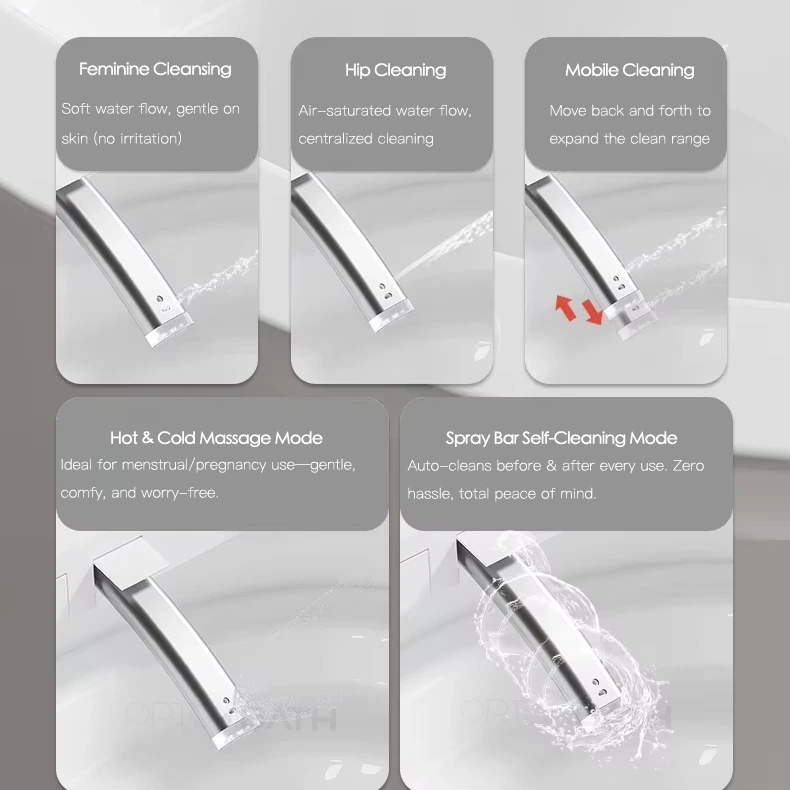
Here’s what puts two-piece toilets in the easy-install category:

  • The flat surface where the tank meets the bowl gives the bidet bracket a stable mounting point.
  • Standard bolt spacing (5.5 inches on most models) is what every major bidet brand designs around.
  • There’s typically enough clearance between the bolt holes and the tank to slide the bidet into position without obstruction.
  • The water supply valve is usually accessible, making the T-valve connection straightforward.

One-piece toilets  where the tank and bowl are moulded as a single unit  are a bit more variable. Many work perfectly well. The ones that cause problems are those with a French curve design, where the tank slopes forward in a concave arc instead of meeting the bowl at a clean right angle. That curve prevents a standard bidet bracket from sitting flat.

Toilet Types That Don't Play Well With Standard Bidet Attachments

These four toilet configurations account for the majority of compatibility failures. Knowing which category your toilet falls into before you buy will save you a frustrating return trip.

1. One-piece toilets with a French curve tank

This is the most common incompatibility issue in the market. A French curve toilet has a concave tank that flows smoothly down into the bowl, elegant-looking, genuinely difficult to fit a bidet onto.

  •  The curved surface means a standard bidet bracket can’t sit flat against the bowl.
  • Even if you force it into position, the seat often tilts forward, creating a leak risk and an uncomfortable angle.
  • The only reliable option for French curve toilets is either a bidet seat designed specifically for this shape (a small product category), or upgrading to a smart toilet with an integrated bidet. 

2. Wall-hung toilets

Wall-hung toilets are becoming increasingly common in modern bathrooms, and they present a fundamental structural problem for bidet attachments.

  •  There is no tank behind the seat; the cistern is concealed inside the wall.
  • Standard bidet attachments connect to the cold water supply using a T-valve at the toilet’s fill valve, which is inaccessible on wall-hung models.
  • The mounting geometry is also different; there’s no standard bolt pattern or back surface for a clip-on attachment to secure to.

If you want bidet functionality with a wall-hung toilet, the practical solution is a rimless smart toilet with an integrated bidet seat, installed as a complete unit.

3. Skirted or concealed-trap toilets

These toilets have a smooth outer skirt that hides the trapway, giving them a cleaner visual profile. They’re compatible with bidet seats in most cases, but the water supply connection can be tricky.

  • The supply valve may be partially hidden by the skirt, making a standard T-valve connection awkward.
  • A flexible hose extension usually solves this  but confirm the valve is accessible before you buy.

4. Compact or D-shaped toilets

Found mainly in smaller bathrooms in the UK and Europe, D-shaped and compact elongated bowls have non-standard dimensions that some bidet seats won’t accommodate.

  • The bolt-hole-to-front-edge measurement is shorter than a standard elongated bowl, which can cause the bidet seat to overhang uncomfortably.
  • Some brands manufacture compact-specific models  worth checking before you write it off.

Quick Compatibility Reference

Use this table as a fast sanity check before purchasing any bidet product.

Toilet Type

Attachment

Bidet Seat

Notes

Two-piece (standard)

✓  Works

✓  Works

Most compatible option

One-piece (flat back)

✓  Usually works

✓  Usually works

Measure bolt clearance

One-piece (French curve)

✗  Rarely fits

~  Select models only

Contact manufacturer

Elongated bowl

✓  Works

✓  Works

Buy elongated size

Round bowl

✓  Works

✓  Works

Buy round size

Wall-hung toilet

✗Not compatible

✗Not compatible

Integrated smart toilet recommended

Skirted / concealed trap

May need T-valve ext.

May need adapter

Check supply valve access

Four Measurements to Take Before You Buy Anything

The single best thing you can do before ordering a bidet attachment is spend five minutes with a tape measure. These four measurements will either confirm compatibility or flag a problem  and they take less time than a return shipment.

Measurement

Target Range

Why It Matters

Bolt hole spacing

5.5″ – 7.5″

Outside this range = likely incompatible

Tank-to-bolt clearance

Min. 1.5″

Less than this and the bidet won’t sit flat

Bowl shape

Round (~16.5″) or Elongated (~18.5″)

Match your bidet size to your bowl

Water supply valve

Accessible at side/back

Concealed valves may need a flex extension

Electrical outlet

Within 4 ft (electric bidets only)

Needs a grounded outlet  no extension cords

Bidet Attachment vs. Bidet Seat: Which One Works for Your Toilet?

There are two main retrofit options when it comes to adding bidet functionality to an existing toilet. They have different compatibility profiles, so it’s worth understanding the distinction. 

Non-electric bidet attachment

This is a slim plate that mounts between your existing toilet seat and the bowl rim. It has no electronics, connects to the cold water supply only, and adjusts water pressure mechanically.

  • Compatible with most round and elongated two-piece toilets.
  • Rarely compatible with French curve or wall-hung toilets.
  • Installs in 15–20 minutes with no plumbing experience required.
  • Non-electric bidet attachments dominated sales in 2025, with stable monthly volumes reflecting their role as the entry-level standard.

Electric bidet seat

This replaces your existing toilet seat entirely. It connects to both the water supply and a nearby electrical outlet, and typically offers heated water, a warm air dryer, heated seat, and pressure control.

  • Requires a grounded electrical outlet within approximately 4 feet of the toilet.
  • More flexibility in bowl shape  many models accommodate compact elongated and some one-piece designs.
  • Higher upfront cost, but 53% of users in market surveys cite improved cleanliness as the primary reason they’d never go back.
  • For French curve toilets, electric bidet seats with a slim, low-profile rear design are your only realistic option.

What About Older Toilets and Non-Standard Plumbing?

If your bathroom was built before the 1990s, there are a few additional things worth checking before you commit to a bidet attachment.

  • Water pressure: Most bidet attachments require a minimum of 0.7 bar (around 10 PSI) to function properly. Very old plumbing in some properties can fall short of this, particularly in upper-floor bathrooms.
  • Supply valve condition: If the shutoff valve behind your toilet hasn’t been turned in years, it may be stiff or partially corroded. Test it before installing. A valve that won’t fully close is a problem during any plumbing work.
  • Thread standards: Most bidet attachments use 7/8″ connections (standard in the US and UK). If your supply line uses a different thread, you’ll need an adapter; these are inexpensive and widely available.

None of these are deal-breakers, but knowing about them in advance means you can address them as part of the installation rather than discovering them mid-way through.

So Can You Install a Bidet on Any Toilet?
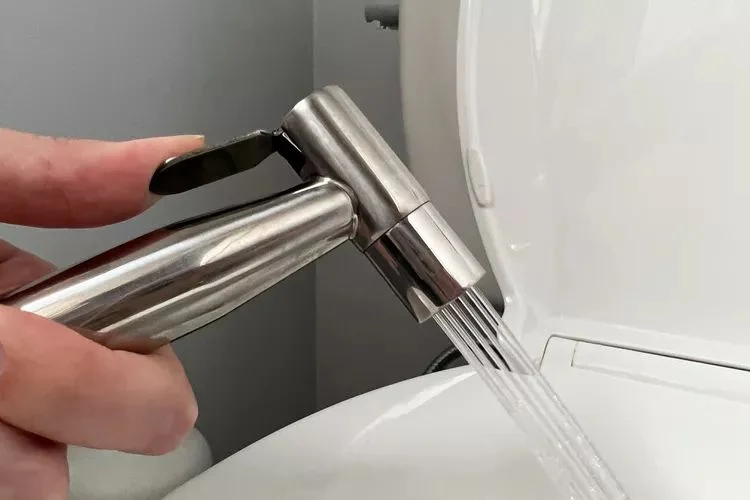
bidet toilet

The key is to check three things before purchasing: your toilet type (one-piece vs two-piece, and whether it has a French curve), your four measurements (bolt spacing, clearance, bowl length, and supply valve access), and whether your chosen bidet comes in the right bowl size  round or elongated.

Most manufacturers publish compatibility guides for their products. If your toilet is a standard two-piece, you won’t even need to check if it will work.

Ready to Upgrade Your Bathroom?

At Ortonbaths, we manufacture a full range of modern sanitaryware  including rimless toilets, wall-hung systems, and smart toilet suites with integrated bidet functionality  built to the same CE and WaterSense standards used in commercial and hospitality projects worldwide.

Whether you’re renovating a single bathroom or specifying fixtures for a full development, we can help you find a solution that works  and fits.

Conclusion

Installing a bidet is one of the easiest bathroom upgrades you can make. For most people with a standard two-piece toilet, it’s a 20-minute job that costs less than a dinner out and makes a noticeable difference every single day.

But “most” isn’t “all.” And the gap between a smooth install and a frustrating return sits entirely in that five minutes you spend measuring before you order.

Here’s what to take away from this guide:

  • Two-piece toilets with a round or elongated bowl are compatible with almost every bidet attachment and seat on the market just match the bowl size and check your bolt spacing.
  • One-piece toilets with a French curve are the most common compatibility trap. Don’t assume any standard product will fit without checking the specific model first.
  • Wall-hung toilets need an integrated solution; a clip-on attachment simply won’t work here.
  • Four measurements: bolt spacing, tank clearance, bowl length, and supply valve access will tell you everything you need to know before spending a penny.

FAQs

Most toilets, yes. Standard two-piece toilets with a round or elongated bowl work with almost every bidet attachment available. The exceptions are one-piece French curve toilets, wall-hung toilets, and unusually shaped decorative bowls.

Take four: bolt hole spacing (5.5–7.5 inches), tank-to-bolt clearance (minimum 1.5 inches), bowl length (round ≈ 16.5 inches, elongated ≈ 18.5 inches), and confirm your cold water supply valve is accessible. Five minutes with a tape measure saves a frustrating return.

Many do if the back of the toilet is flat and bolt spacing is standard. The problem is French curve one-piece toilets, where the curved tank prevents the bracket from sitting flat. Always check your specific model against the manufacturer’s compatibility list first.

No standard attachments and bidet seats won’t work on wall-hung toilets. The cistern is concealed inside the wall, making the water supply inaccessible for a T-valve connection. An integrated smart toilet unit is the only practical solution here.

Not at all. On a standard two-piece toilet, it takes 15–20 minutes with no plumbing experience. You remove the existing seat, mount the bracket over the bolt holes, reattach the seat, and connect a T-valve to the cold water supply with no drilling or tools beyond a wrench.
The short answer is: almost, but not quite. Most people who want to install a bidet attachment can do so without calling a plumber, replacing their toilet, or spending more than an afternoon on it. The global bidet market reached $4.16 billion in 2025 and is growing at a steady 4.2% annually  and the single biggest driver of that growth is the simple clip-on bidet attachment, which works with standard toilets straight out of the box.

But there are exceptions. Certain toilet designs, particularly one-piece toilets with a French curve tank, wall-hung toilets, and some unusually shaped decorative models  will either not accept a bidet attachment at all or require a specific product to make it work. Meanwhile, 45.3% of negative bidet reviews cite compatibility issues as the primary complaint, which tells you this isn’t a trivial concern.

This guide covers exactly what to look for before you buy. You’ll learn the toilet types that are almost universally compatible, the ones that cause problems, four measurements you need to take right now, and how to pick the right style of bidet for your specific toilet. No guess work, just the practical information you need to get this right the first time.

Compatible Toilet Types for Bidet Installation

The Most Compatible Toilet Types for Bidet Installation

If you have a standard two-piece toilet of the kind with a separate tank and bowl bolted together  you’re almost certainly in the clear. These account for the vast majority of toilets installed in homes across North America, Europe, and Latin America, and virtually every bidet attachment and bidet seat on the market is designed to fit them.

Here’s what puts two-piece toilets in the easy-install category:

  • The flat surface where the tank meets the bowl gives the bidet bracket a stable mounting point.
  • Standard bolt spacing (5.5 inches on most models) is what every major bidet brand designs around.
  • There’s typically enough clearance between the bolt holes and the tank to slide the bidet into position without obstruction.
  • The water supply valve is usually accessible, making the T-valve connection straightforward.

One-piece toilets  where the tank and bowl are moulded as a single unit  are a bit more variable. Many work perfectly well. The ones that cause problems are those with a French curve design, where the tank slopes forward in a concave arc instead of meeting the bowl at a clean right angle. That curve prevents a standard bidet bracket from sitting flat.

Toilet Types That Don't Play Well With Standard Bidet Attachments

These four toilet configurations account for the majority of compatibility failures. Knowing which category your toilet falls into before you buy will save you a frustrating return trip.

1. One-piece toilets with a French curve tank

This is the most common incompatibility issue in the market. A French curve toilet has a concave tank that flows smoothly down into the bowl, elegant-looking, genuinely difficult to fit a bidet onto.

  •  The curved surface means a standard bidet bracket can’t sit flat against the bowl.
  • Even if you force it into position, the seat often tilts forward, creating a leak risk and an uncomfortable angle.
  • The only reliable option for French curve toilets is either a bidet seat designed specifically for this shape (a small product category), or upgrading to a smart toilet with an integrated bidet. 

2. Wall-hung toilets

Wall-hung toilets are becoming increasingly common in modern bathrooms, and they present a fundamental structural problem for bidet attachments.

  •  There is no tank behind the seat; the cistern is concealed inside the wall.
  • Standard bidet attachments connect to the cold water supply using a T-valve at the toilet’s fill valve, which is inaccessible on wall-hung models.
  • The mounting geometry is also different; there’s no standard bolt pattern or back surface for a clip-on attachment to secure to.

If you want bidet functionality with a wall-hung toilet, the practical solution is a rimless smart toilet with an integrated bidet seat, installed as a complete unit.

3. Skirted or concealed-trap toilets

These toilets have a smooth outer skirt that hides the trapway, giving them a cleaner visual profile. They’re compatible with bidet seats in most cases, but the water supply connection can be tricky.

  • The supply valve may be partially hidden by the skirt, making a standard T-valve connection awkward.
  • A flexible hose extension usually solves this  but confirm the valve is accessible before you buy.

4. Compact or D-shaped toilets

Found mainly in smaller bathrooms in the UK and Europe, D-shaped and compact elongated bowls have non-standard dimensions that some bidet seats won’t accommodate.

  • The bolt-hole-to-front-edge measurement is shorter than a standard elongated bowl, which can cause the bidet seat to overhang uncomfortably.
  • Some brands manufacture compact-specific models  worth checking before you write it off.

Quick Compatibility Reference

Use this table as a fast sanity check before purchasing any bidet product.

Toilet Type

Attachment

Bidet Seat

Notes

Two-piece (standard)

✓  Works

✓  Works

Most compatible option

One-piece (flat back)

✓  Usually works

✓  Usually works

Measure bolt clearance

One-piece (French curve)

✗  Rarely fits

~  Select models only

Contact manufacturer

Elongated bowl

✓  Works

✓  Works

Buy elongated size

Round bowl

✓  Works

✓  Works

Buy round size

Wall-hung toilet

✗Not compatible

✗Not compatible

Integrated smart toilet recommended

Skirted / concealed trap

May need T-valve ext.

May need adapter

Check supply valve access

Four Measurements to Take Before You Buy Anything

The single best thing you can do before ordering a bidet attachment is spend five minutes with a tape measure. These four measurements will either confirm compatibility or flag a problem  and they take less time than a return shipment.

Measurement

Target Range

Why It Matters

Bolt hole spacing

5.5″ – 7.5″

Outside this range = likely incompatible

Tank-to-bolt clearance

Min. 1.5″

Less than this and the bidet won’t sit flat

Bowl shape

Round (~16.5″) or Elongated (~18.5″)

Match your bidet size to your bowl

Water supply valve

Accessible at side/back

Concealed valves may need a flex extension

Electrical outlet

Within 4 ft (electric bidets only)

Needs a grounded outlet  no extension cords

Bidet Attachment vs. Bidet Seat: Which One Works for Your Toilet?

There are two main retrofit options when it comes to adding bidet functionality to an existing toilet. They have different compatibility profiles, so it’s worth understanding the distinction. 

Non-electric bidet attachment

This is a slim plate that mounts between your existing toilet seat and the bowl rim. It has no electronics, connects to the cold water supply only, and adjusts water pressure mechanically.

  • Compatible with most round and elongated two-piece toilets.
  • Rarely compatible with French curve or wall-hung toilets.
  • Installs in 15–20 minutes with no plumbing experience required.
  • Non-electric bidet attachments dominated sales in 2025, with stable monthly volumes reflecting their role as the entry-level standard.

Electric bidet seat

This replaces your existing toilet seat entirely. It connects to both the water supply and a nearby electrical outlet, and typically offers heated water, a warm air dryer, heated seat, and pressure control.

  • Requires a grounded electrical outlet within approximately 4 feet of the toilet.
  • More flexibility in bowl shape  many models accommodate compact elongated and some one-piece designs.
  • Higher upfront cost, but 53% of users in market surveys cite improved cleanliness as the primary reason they’d never go back.
  • For French curve toilets, electric bidet seats with a slim, low-profile rear design are your only realistic option.

What About Older Toilets and Non-Standard Plumbing?

If your bathroom was built before the 1990s, there are a few additional things worth checking before you commit to a bidet attachment.

  • Water pressure: Most bidet attachments require a minimum of 0.7 bar (around 10 PSI) to function properly. Very old plumbing in some properties can fall short of this, particularly in upper-floor bathrooms.
  • Supply valve condition: If the shutoff valve behind your toilet hasn’t been turned in years, it may be stiff or partially corroded. Test it before installing. A valve that won’t fully close is a problem during any plumbing work.
  • Thread standards: Most bidet attachments use 7/8″ connections (standard in the US and UK). If your supply line uses a different thread, you’ll need an adapter; these are inexpensive and widely available.

None of these are deal-breakers, but knowing about them in advance means you can address them as part of the installation rather than discovering them mid-way through.

So Can You Install a Bidet on Any Toilet?

bidet toilet

The key is to check three things before purchasing: your toilet type (one-piece vs two-piece, and whether it has a French curve), your four measurements (bolt spacing, clearance, bowl length, and supply valve access), and whether your chosen bidet comes in the right bowl size  round or elongated.

Most manufacturers publish compatibility guides for their products. If your toilet is a standard two-piece, you won’t even need to check if it will work.

Ready to Upgrade Your Bathroom?

At Ortonbaths, we manufacture a full range of modern sanitaryware  including rimless toilets, wall-hung systems, and smart toilet suites with integrated bidet functionality  built to the same CE and WaterSense standards used in commercial and hospitality projects worldwide.

Whether you’re renovating a single bathroom or specifying fixtures for a full development, we can help you find a solution that works  and fits.

Conclusion

Installing a bidet is one of the easiest bathroom upgrades you can make. For most people with a standard two-piece toilet, it’s a 20-minute job that costs less than a dinner out and makes a noticeable difference every single day.

But “most” isn’t “all.” And the gap between a smooth install and a frustrating return sits entirely in that five minutes you spend measuring before you order.

Here’s what to take away from this guide:

  • Two-piece toilets with a round or elongated bowl are compatible with almost every bidet attachment and seat on the market just match the bowl size and check your bolt spacing.
  • One-piece toilets with a French curve are the most common compatibility trap. Don’t assume any standard product will fit without checking the specific model first.
  • Wall-hung toilets need an integrated solution; a clip-on attachment simply won’t work here.
  • Four measurements: bolt spacing, tank clearance, bowl length, and supply valve access will tell you everything you need to know before spending a penny.

FAQs

Most toilets, yes. Standard two-piece toilets with a round or elongated bowl work with almost every bidet attachment available. The exceptions are one-piece French curve toilets, wall-hung toilets, and unusually shaped decorative bowls.

Take four: bolt hole spacing (5.5–7.5 inches), tank-to-bolt clearance (minimum 1.5 inches), bowl length (round ≈ 16.5 inches, elongated ≈ 18.5 inches), and confirm your cold water supply valve is accessible. Five minutes with a tape measure saves a frustrating return.

Many do if the back of the toilet is flat and bolt spacing is standard. The problem is French curve one-piece toilets, where the curved tank prevents the bracket from sitting flat. Always check your specific model against the manufacturer’s compatibility list first.

No standard attachments and bidet seats won’t work on wall-hung toilets. The cistern is concealed inside the wall, making the water supply inaccessible for a T-valve connection. An integrated smart toilet unit is the only practical solution here.

Not at all. On a standard two-piece toilet, it takes 15–20 minutes with no plumbing experience. You remove the existing seat, mount the bracket over the bolt holes, reattach the seat, and connect a T-valve to the cold water supply with no drilling or tools beyond a wrench.
Copyright 2023 Orton Group | All Rights Reserved

Follow ORTONBATH on social media

Get in Touch

Feel free to drop us a line below!