Choosing between a one-piece and two-piece toilet isn’t about “best overall,” it’s about which design fits your space, cleaning habits, repair preferences, and budget. In general, two-piece toilets are the traditional choice and are often easier to install and service, while one-piece toilets offer a sleeker, more hygienic profile with fewer seams and fewer potential leak points at the tank-to-bowl connection.
Ortonbaths consistently emphasizes modern styling, water-saving performance, and designs built for easier cleaning and maintenance across home and commercial washroom settings. That lens matters here: the “better” toilet is the one that stays clean, flushes reliably, and avoids repeat service calls in the environment you’re installing it in.
One-piece vs two-piece: the real differences
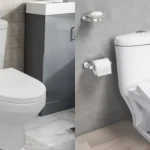
A one-piece toilet is molded as a single integrated fixture tank and bowl in one unit, creating a seamless exterior with fewer joints and crevices. Ortonbaths frames one-piece toilets as a contemporary option that supports easier cleaning and strong hygienic performance, with buyer considerations like bowl shape, trapway type, flush technology, rough-in/space, and comfort height.
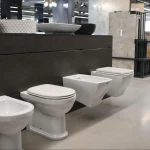
A two-piece toilet has a separate tank and bowl that are joined during installation (typically bolted and sealed with a gasket between tank and bowl). This is the conventional configuration found in many homes, and it’s widely regarded as easier to service because components are more accessible and replaceable.
If you’re searching online and keep seeing the phrase “one-piece or two-piece toilet”, your decision usually comes down to three practical realities:
- how tight your bathroom footprint is,
- how much you care about fast wipe-down cleaning, and
- whether you prefer easier part replacement down the road, even if it means one more seam to keep clean.
Benefits, risks, and performance trade-offs
Two-piece toilets: why homeowners still choose them
- Two-piece toilets are commonly described as easier to install, and the separate tank-and-bowl format can make repairs and replacements more straightforward and cost-effective, especially if you want easier access to service parts over time.
- The main risk with two-piece toilets is the tank-to-bowl connection: over time, leaks can develop at the tank gasket/bolts, and the seam between tank and bowl can become a “collection zone” for grime that requires more detailed cleaning.
- From a clog-prevention standpoint, Ortonbaths notes that two-piece designs can be easier to maintain and unclog because access is more straightforward, and it recommends looking for clog-resistance features like robust flush systems, wider trapways (they cite at least ~2 inches), and glazed trapways/bowls to reduce friction.

One-piece toilets: why they feel “modern” in daily use
- One-piece toilets are strongly associated with easier cleaning because there’s no tank-to-bowl seam and fewer exterior crevices, an advantage Ortonbaths repeatedly ties to hygiene and maintenance convenience.
- This Old House also highlights that one-piece toilets have a sleeker profile, can be ideal for smaller bathrooms, and avoid the specific leak risk that comes from tank gasket issues found in two-piece designs.
- The main risks/trade-offs are cost and handling: Ortonbaths cautions that installing a one-piece toilet can be trickier due to size and weight (sometimes needing two people), and its own comparison guide notes one-piece toilets typically cost more upfront.
Repair vs replacement: what changes with each design
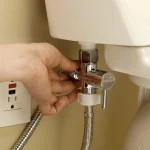
For both toilet types, the most common “fixable” problems tend to be internal wear parts: running toilets, slow fills, leaks caused by worn seals (like flappers), and loose connections.
The EPA’s WaterSense program notes that toilets are often the culprit in household leaks, and that many toilet leaks are due to old/worn flappers, an inexpensive part that’s typically quick to replace.
Where one-piece vs two-piece matters is what you can isolate:
- With a two-piece system, the tank and bowl are separate, which can make certain repairs more accessible (and in some situations, replacement of a tank or tank hardware can be approached without replacing the entire fixture). This Old House explicitly points out that separating the tank and bowl makes units more accessible for repairs and replacements.
- With a one-piece, there’s no tank-to-bowl gasket connection to fail, which removes one leak-prone junction entirely.
A separate but critical repair-versus-replace trigger is leak damage at the base. InterNACHI explains that a failing wax ring seal can leak contaminated water into flooring and subfloor spaces (often out of sight), causing mold and wood rot, and notes subtle early warning signs like slight rocking, faint sewer odor, and staining/softness near the base.
From a cost perspective, HomeAdvisor’s national data put typical toilet repair in the $150–$391 range (national average $271), while installation of a new toilet averages $374 (typical range $224–$533). Those numbers explain why some households choose replacement if repairs repeat or if efficiency upgrades are part of the plan.
If your issue is flush hardware rather than cracked porcelain or hidden floor damage, Ortonbaths also sells repair hardware intended for both styles, its ORTONBATH™ Universal Water-Saving Toilet Repair FLUSH Kit with Dual Flush Valve, Lever Handle, White Water-Saving Dual Flush TOILET FLUSHING VALVE is presented as a solution for repairing one-piece and two-piece toilets by replacing a dual-flush valve assembly and related parts.

Costs and long-term value: what you’ll actually pay
Because you requested “no specific constraint” on region, the numbers below use widely cited U.S. national estimates from HomeAdvisor and EPA WaterSense sources.
Upfront cost (fixture + install)
- HomeAdvisor’s toilet pricing guide places many commonly purchased toilets in the $130–$520 range, while also noting a much wider overall market range depending on features.
- When you compare types, HomeAdvisor states that one-piece toilets typically cost more (it cites $150–$1,500 on average), and describes two-piece toilets as the more wallet-friendly option while also explaining that two-piece toilets use a bowl bolted to a separate tank with a gasket sealing the water passage.
- On the installation side, HomeAdvisor reports an average professional installation cost of about $374 (typical range $224–$533, with higher/lower outliers).
Long-term value (water and hassle)
- If replacing an older, inefficient toilet is on the table, the EPA states that swapping to WaterSense-labeled toilets can reduce toilet water use by 20–60%, saving nearly 13,000 gallons per year and potentially more than $170 per year in water costs (with much larger lifetime savings cited in their overview).
Comparison table: one-piece vs two-piece
InterNACHI’s published life-expectancy guidance for toilets and tank components.
Criteria | One-piece toilet (pros / cons) | Two-piece toilet (pros / cons) | Estimated national costs |
Cleaning & hygiene | Pros: Seamless exterior, fewer grime traps; generally easier wipe-down. | Pros: Traditional profile; many designs/variants available. Cons: Tank-to-bowl seam can attract dirt and require extra detailing. | Fixture prices vary widely; many mainstream toilets fall between $130 and $520. |
Leak risk points | Pros: Eliminates the tank-to-bowl gasket leak point. Cons: Still has internal seals/valves that can fail. | Pros: Serviceable design; gaskets/bolts can be replaced. Cons: Tank gasket/bolts can develop leaks over time. | Repairs often $150–$391 (avg $271), depending on issue. |
Install handling | Pros: Compact look; fewer assembly steps once positioned. Cons: Heavier/bulkier to move; can be a two-person job. | Pros: Often easier to install because the tank and bowl are separate. Cons: Requires careful sealing of tank/bowl connection. | Pro install average ≈ $374 (typical range $224–$533). |
Upfront price tendency | Pros: Higher-end look; often positioned as premium. Cons: Typically higher initial cost. | Pros: Generally budget-friendlier. Cons: May trade aesthetics/cleaning ease for price. | HomeAdvisor cites one-piece $150–$1,500 avg. |
Efficiency opportunity | Pros: Many one-piece designs pair well with modern water-saving tech. | Pros: Many two-piece designs also offer water-saving tech; easier maintenance can keep performance consistent. | WaterSense upgrade can cut toilet water use 20–60% and save ~13k gal/year. |

Homeowner checklist: choosing the right toilet for your bathroom
A practical “buying decision” is really a mini-diagnosis of your bathroom constraints and your household’s habits. Ortonbaths recommends evaluating items like bowl shape, trapway type (S-trap vs P-trap, wall/floor outlet), flushing technology, comfort height, finish/glazing, and rough-in/space constraints.
Use this short checklist before you click “buy”:
- Measure your rough-in and footprint. HomeAdvisor defines rough-in as the distance from the wall behind the toilet to the center of the floor bolts, and notes that size is crucial when selecting a new toilet.
- Pick your bowl shape intentionally. This Old House explains that round bowls save space, while elongated bowls are often more comfortable but require more room.
- Decide how important “fast clean” is in your life. If you hate cleaning seams and tight crevices, one-piece (and rimless bowl designs) may better match your routine.
- Match flush style to your clog reality. This Old House notes siphonic designs can clog due to long, narrow trapways, while washdown designs have shorter, wider trapways that rarely back up (but may need more frequent cleaning due to a smaller water spot).
- Be honest about repair tolerance. If you value easier access for repairs, two-piece designs are widely described as more service-friendly because of their separate tank and bowl.
Plan for future-proof efficiency. If your current toilet is older/inefficient, EPA WaterSense estimates substantial savings with modern WaterSense-labeled replacements.
Maintenance habits that keep either toilet running like new
Start with the “big two” that drive most headaches: leaks and flush performance.
- For leaks, the EPA notes that toilets are often responsible for household leaks and that worn flappers commonly cause toilet leaks, an inexpensive fix that can restore performance quickly.
- For base leaks, InterNACHI stresses that wax seal failures can leak contaminated water into hidden spaces beneath the floor, creating mold/rot risk and potential health concerns, and that warning signs can include rocking, odors, stains, and soft flooring near the base.
- For cleaning, Ortonbaths’ guidance on rimless and Tornado Flush concepts ties directly to everyday maintenance goals: rimless designs reduce places for grime to hide (because there’s no rim cavity), and Tornado Flush-style water movement aims to improve bowl rinsing effectiveness and reduce residue, both of which can lower the “scrub time” cost of ownership.
Finally, if clogs are part of your reality, Ortonbaths recommends focusing on clog-resistance features, a robust flush system, wider trapway, and glazed bowl/trapway surfaces because they directly influence how reliably waste clears with fewer repeat flushes.

Conclusion
If you want a modern, easy-clean upgrade aligned with Ortonbaths’ design-and-hygiene philosophy, start by browsing their one-piece and two-piece ranges and then choose based on your space and service preferences.
For a one-piece option, ORTONBATH™ LATIN AMERICA MODERN CLASSIC WHITE CERAMIC ONE PIECE TOILET ECONOMICAL SIPHONIC TOILET WITH SHORT TANK SOFT CLOSE SEAT COVER (OTM8025JM) is positioned as a space-conscious, easy-clean design with dual-flush capability, while ORTONBATH™ Classic One-Piece Dual-Flush Elongated Comfort Height … (OT1138) highlights comfort-height ergonomics and a complete in-box install kit.
For two-piece needs, models like ORTONBATH™ P-Trap 2PC Two Piece Toilet Floor Mount Rimless Ceramic … (OTA-08D) and ORTONBATH™ Transitional Two-Piece Elongated … Tornado Flush Toilet with Seat, Cotton White emphasize rimless hygiene, modern styling, and dual-flush operation, matching Ortonbaths’ broader “easy cleaning & maintenance” positioning for both residential and commercial environments.
And when the issue is repairable rather than replaceable, Ortonbaths’ ORTONBATH™ Universal Water-Saving Toilet Repair FLUSH Kit … is explicitly marketed for repairing both one-piece and two-piece toilets by replacing key dual-flush components.