
1. Design and Aesthetics
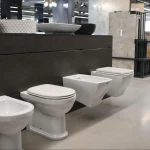
- Wall-Hung: The main appeal is its modern, minimalist look. Because it doesn’t touch the floor, it makes the bathroom appear more spacious, airy, and easier on the eyes. It’s a favorite in contemporary, luxury, and design-forward spaces.
- Normal Toilet: Has a classic, familiar two-piece (tank and bowl) or one-piece design that sits firmly on the floor. It’s functional but takes up more visual space.
2. Cleaning and Hygiene
- Wall-Hung: The clear winner. With the bowl suspended off the floor, you can mop or wipe the entire floor underneath it without any obstacles. This eliminates the hard-to-reach area around the base where dirt, grime, and bacteria typically accumulate.
- Normal Toilet: The sealed base is a major cleaning headache. It collects dust, hair, and spills, often requiring you to get on your hands and knees to scrub around it.
3. Installation Process and Cost
This is the most significant practical difference.
- Wall-Hung: Requires a carrier system or in-wall frame. This heavy-duty metal frame is bolted to the floor and wall structure before the wall is closed up with drywall. The plumbing and tank are hidden inside this frame. This makes installation:

- Normal Toilet: Installation is straightforward. The toilet is placed on a wax ring over the floor flange and bolted down. The tank is then connected to the water supply. It’s a common job for any plumber and can be done in an existing bathroom with minimal disruption.

4. Space and Flexibility
- Wall-Hung: Excellent for saving space, especially in small bathrooms. Since it doesn’t have a base, the floor space is continuous, making the room feel larger. The height can be adjusted to any preference (e.g., comfort height for taller users or accessibility).
- Normal Toilet: Takes up more physical and visual space. The height is standardized and cannot be changed.
5. Maintenance and Repairs
- Wall-Hung: If the flushing mechanism or internal parts fail, you need to access them through a service panel (usually a removable tile or piece of wallboard) installed during construction. Without a panel, you would have to cut into the wall, which is a major drawback.
- Normal Toilet: All the working parts are right behind you in the tank. Lid comes off, and everything is instantly accessible for easy and cheap repairs.
6. Perceived Sturdiness
- Wall-Hung: People are often concerned about them being less sturdy. However, when installed correctly on a proper carrier system, they are extremely robust and can hold well over 400 pounds. The fear is psychological.
- Normal Toilet: Feels sturdy because its weight is directly supported by the floor. There are no perceived stability concerns.
Which One Should You Choose?
Choose a Wall-Hung Toilet if:
- You value a modern, minimalist aesthetic and clean lines.
- You are building a new home or doing a full bathroom renovation.
- Easy cleaning is a top priority.
- You want to make a small bathroom feel more open.
- You need a customizable height for accessibility or comfort.
- Your budget allows for a higher initial investment.
Choose a Normal Toilet if:
- You are on a tighter budget for both the fixture and installation.
- You need to replace an existing toilet without renovating.
- You prefer a traditional bathroom style.
- You want the simplest possible access for repairs and maintenance.
- You are not planning to open up the bathroom walls.
In summary, the wall-hung toilet is a premium, design-led choice that offers superior aesthetics and cleanliness but comes with a higher cost and more complex installation. The normal toilet is a practical, economical, and reliable workhorse found in most homes.